


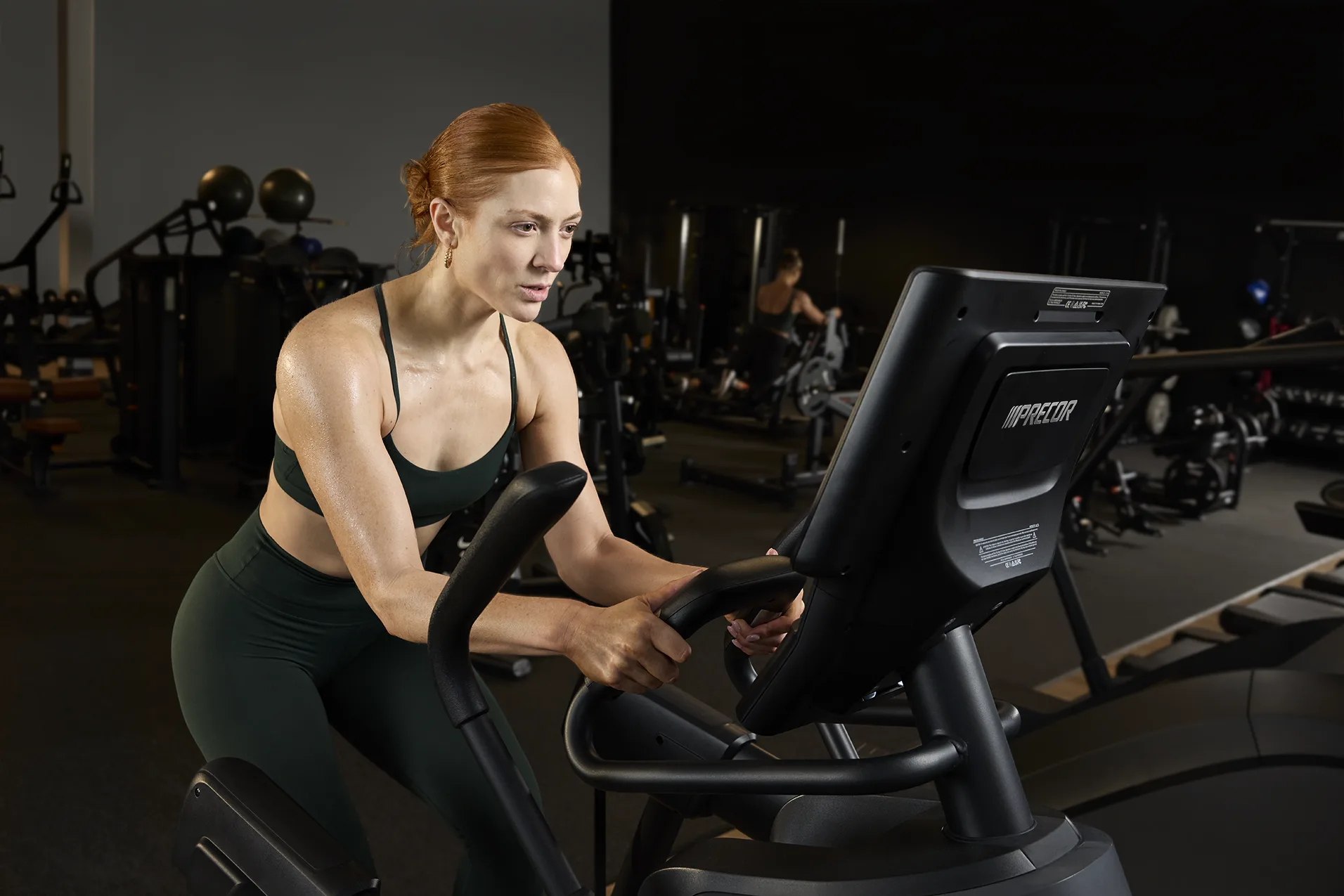
Cardio Isn’t Going Away. It’s Becoming a Part of Something Bigger
Cardio engagement isn’t declining because of equipment. It’s evolving alongside how people train. This article explores how operators can adapt cardio experiences to support shorter, more targeted workouts while driving stronger engagement and repeat use.

Walk through almost any fitness facility today and you’ll notice a shift. The cardio floor is still there, but how it’s being used is evolving.
Strength training has taken a more prominent role across the fitness floor. Members are spending more time lifting, following structured programmes and focusing on performance outcomes beyond traditional cardio.
Cardio hasn’t disappeared. Its role has changed.
Instead of long, steady-state sessions, many members are using cardio in shorter, more targeted ways. Warm-ups before strength training. Interval work between sets. Incline walking instead of running. Conditioning blocks that support lower-body and glute-focused training.
This shift is clearly reflected in how equipment is used.
Less time spent on long runs.
More time spent walking, climbing and integrating cardio into broader training routines.
For operators, this creates a different kind of opportunity.
Cardio no longer needs to carry the entire workout. It needs to support how people are training today.
That means offering equipment and experiences that align with these patterns:
Incline-based training that supports lower-body activation
Versatile cardio such as AMT and EFX that complements strength work
StairClimbers that deliver intensity in shorter timeframes
Treadmills that support both walking and higher-intensity performance training
The focus shifts from duration to purpose.
Cardio still delivers results. Its role is more targeted.
Running and walking remain some of the most effective and accessible forms of exercise. They support cardiovascular health, performance and long-term wellness.
What’s changed is how often and how long members engage with them.
Shorter sessions, more focused efforts and greater integration with strength training now define how cardio fits into a routine.
Consistency still drives results. The difference is that consistency now comes from making cardio easier to integrate into a workout, not harder to commit to as a standalone activity.
Equipment that supports this flexibility becomes more valuable.
Incline walking on treadmills, climbing-based workouts on StairClimbers and full-body, low-impact movement on AMTs all align with how members are training today. When paired with more dynamic options such as the Breakaway™ Treadmill for higher-intensity efforts, the cardio floor can support a full spectrum of training styles within shorter, more purposeful sessions.
Variation needs to be designed into the experience
With shorter workouts, every minute matters.
Outdoor training creates natural variation. Indoors, that variation has to be built into the experience to keep sessions engaging and efficient.
Without it, workouts feel repetitive and disconnected from the rest of the training floor.
Members respond to a combination of factors:
how quickly they can get started
how intuitive the interface feels
whether there’s engaging content available
how the movement itself feels
When these elements are aligned, cardio becomes easier to integrate into warm-ups, intervals and conditioning blocks rather than something users avoid.
Comfort and performance shape the experience
Physical feel directly influences whether cardio becomes part of a routine.
Each stride places force through the body. Over time, that impact compounds. If the experience feels harsh or unstable, users shorten sessions or skip it altogether.
Precor treadmills are designed to support a more natural run through Ground Effects® Technology and Integrated Footplant Technology™, reducing impact and creating a smoother, more responsive feel.
The Breakaway™ Treadmill builds on this with a slat belt design that supports higher-intensity training. Features such as Push Mode and cadence-based training give exercisers the ability to move between walking, running and performance-focused efforts within the same session.
That flexibility aligns with how members are training today, shifting between intensity levels rather than staying in a single steady-state workout.
The console experience drives usage
In shorter sessions, usability matters more.
If getting started takes too long or navigating options feels unclear, users lose momentum before the workout even begins. A fast, intuitive interface allows them to start quickly and stay engaged.
Precor’s P94 and P84 touchscreen consoles are designed to reduce friction, with responsive navigation and easy access to workouts and media.
Content extends the experience:
Built-in access to Netflix, YouTube and Pluto TV supports longer or lower-intensity sessions such as walking or recovery work
PrecorCast™ allows users to stream personal content directly to the console
Peloton workouts on Precor treadmills provide structured, instructor-led running, walking and hiking classes that refresh regularly and require no login
Additional features such as smartwatch connectivity and on-console charging help users stay connected and track performance without interruption.
These elements make it easier to start, stay engaged and return to cardio consistently, even in shorter workout windows.
Content and personalisation keep cardio relevant
Cardio needs to adapt to different goals within the same space.
Some members are looking for structured intervals. Others want incline walking, guided workouts or a simple way to stay active between strength sets.
Precor consoles support this range without adding complexity. Users can quickly shift between entertainment, guided training and performance-focused sessions based on how they want to train that day.
When personalisation is easy, cardio becomes more accessible across a wider range of users and training styles.
The most effective cardio floors are designed around how people train
Equipment selection matters. Layout determines how it gets used.
Traditional cardio floors group machines by type. While organised, this approach doesn’t reflect how members actually move through a workout.
More effective layouts organise equipment around training intent.
A performance running area anchored by the Breakaway™ Treadmill creates a destination for interval training, cadence work and higher-intensity efforts.
A strength and cardio integration zone combines treadmills, StairClimbers and AMTs to support lower-body training, incline work and conditioning within a single space.
A conditioning-focused area supports shorter, high-intensity sessions and circuit-style training. This space is typically anchored by equipment such as air bikes, open turf and functional training tools, creating a natural transition between strength work and cardio intervals.
When integrated with versatile cardio equipment like treadmills and AMTs, this area becomes part of a connected training experience rather than a standalone zone.
Organising the floor this way creates flow. Members move with purpose, transition between modalities and use more of the space within a single workout.
Measure what matters
The effectiveness of a cardio floor isn’t defined by how much equipment is installed.
It shows up in:
how often equipment is used
how long members stay on it
how consistently they return
Improving these outcomes requires aligning comfort, usability, content and layout into a cohesive experience that supports how people train.
Cardio remains a core driver of member experience
Cardio continues to play a central role on the gym floor, even as its role evolves.
When it’s designed to support shorter, more targeted and more integrated workouts, it becomes easier to use consistently.
That consistency drives results. And results are what keep members coming back.